The Problem
Corporate social responsibility spending has a credibility problem. Companies fund good work, then describe it in a press release nobody reads, and the money produces goodwill that never reaches an audience. The internal argument is always the same: marketing wants reach, CSR wants integrity, and the two teams rarely build anything together.
AMD had the budget and the intent. What they did not have was a vehicle that could carry their name into a premium environment without the work looking like an advertisement. The moment philanthropy looks like marketing, it stops working as either.
Building It From Nothing
The Good Road started as an original concept: a documentary series about global philanthropy, hosted by two friends reporting honestly on what actually helps and what does not. There was no network attached, no money, and no crew.
I worked with the hosts to assemble the team from the director down, then went after the two things that had to exist before anything else could: a broadcaster and a funder. The order I did that in is the whole story.
The Sequence That Made It Work
First, the letter of interest. I went to WETA, the PBS member station, and secured a letter of interest along with the engagement and approval of the key executive producers. At that point the show still did not exist. What I had was a credible signal from public television that it could.
Then, the money. A colleague had the relationship with AMD’s Chief Marketing Officer and opened the door. I made the case with the LOI in hand and closed the deal, with my own company on the line. The argument was structural: PBS reaches an audience skewed toward high-income executive decision-makers, and a documentary platform lets a technology brand appear in a context of substance rather than interruption. Because the ask was framed against corporate social responsibility objectives rather than as a media buy, it cleared internally on a budget line that had no better story attached to it.
That closed over half a million dollars in sponsorship, funding the entire first season, which went on to become two.
Where the Hardware Went: Pemba
The part that makes this a real story rather than a logo placement: AMD's involvement did not end with a title card. Their hardware went to schools on Pemba, an island off the Tanzanian coast in the Indian Ocean.
Not surplus laptops, either. The schools received VR-enabled workstations, machines powerful enough to genuinely extend what those classrooms could teach, and to connect students with peers in other cultures. A child on Pemba could stand somewhere else in the world.
That is the version of CSR that survives scrutiny. A viewer who suspects corporate philanthropy is a marketing exercise can watch the equipment arrive and be used. The content never had to claim the company cared. It showed a result and let the audience decide.
Running It On the Ground
I was solely responsible for every production requirement, and managed the team that filmed across the world. That is a cleaner sentence than the reality. In practice it meant flights, visas, permits, crew welfare, and clean drinking water in places where none of it can be ordered in advance.
At one point I was on a satellite phone in Tanzania sourcing fuel for a generator while my director shot scenes with the talent. That is the job: keep every obstacle away from the people making the work, so the work gets made.
Why It Worked
- The story came first. The series was editorially independent and honest about failure in the aid sector, which is the only reason PBS would carry it, and the only reason viewers trusted it.
- The sponsor bought context, not attention. Appearing inside credible content buys something an ad cannot: the audience's assumption that you belong there.
- Three stakeholders, one narrative. Network, sponsor, and subject each needed different things. Aligning them without diluting the story was the actual job.
- The proof was physical. Hardware in a classroom is not a claim. It is evidence, and evidence is what makes corporate storytelling defensible.
On Location


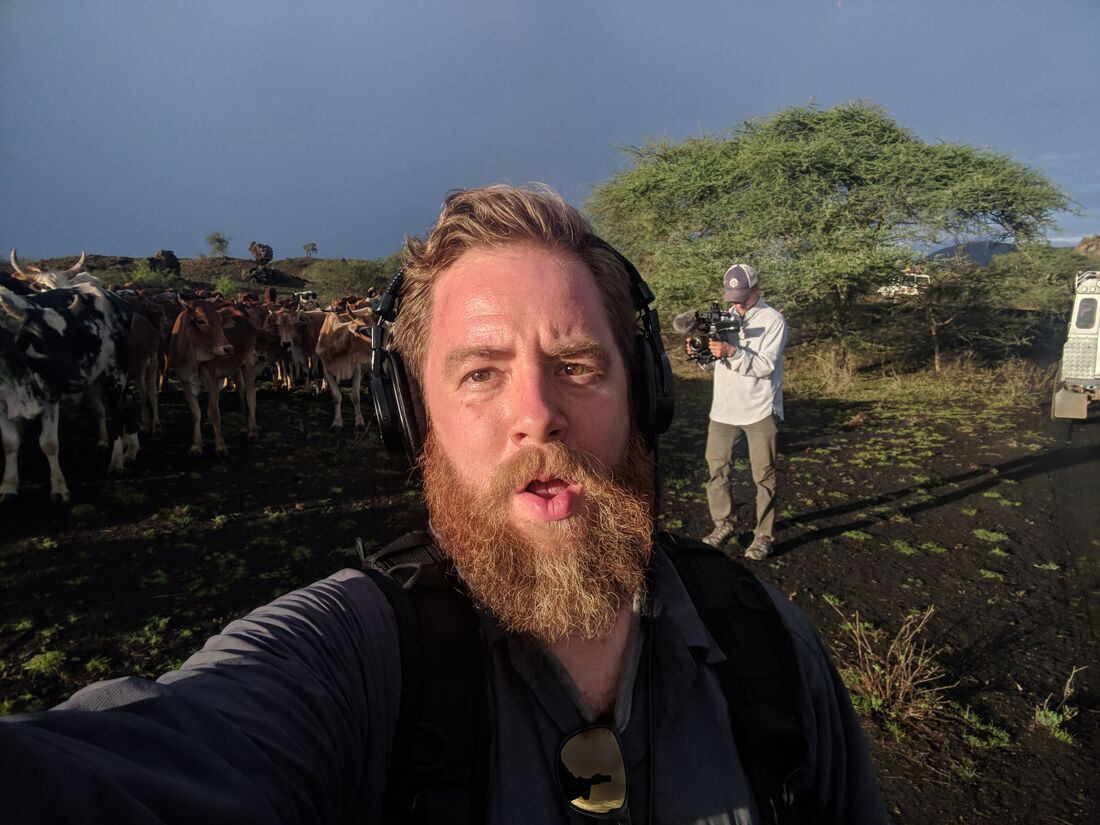


Production stills · Tanzania & East Africa, November 2017
What This Demonstrates
Corporate storytelling works when the commercial objective and the human story are solved together rather than traded off. This project required pitching a C-suite executive, satisfying a public broadcaster's editorial standards, and producing across multiple countries. The same discipline applies whether the subject is philanthropy or a semiconductor product line.
← All case studies